Hydraulic Hose Fitting Guide
Meta Description: Complete guide to hydraulic hose fittings. Learn about types (JIC, NPT, ORFS, BSP), how to choose the right one, and installation tips. Ensure your hydraulic system’s reliability.
<style> body { font-family: Calibri, sans-serif; } </style>
Hydraulic Hose Fitting: The Ultimate Guide to Types and Selection
In any hydraulic system, the hoses carry the fluid, but it’s the hydraulic hose fittings that hold everything together. These critical components create the secure, leak-free connections that allow hydraulic systems to withstand extreme pressures and demanding conditions. Choosing the wrong fitting can lead to leaks, pressure drops, and even catastrophic system failure.
This comprehensive guide will help you understand everything you need to know about hydraulic hose fittings, from the different types and thread standards to essential selection criteria.
What is a Hydraulic Hose Fitting?
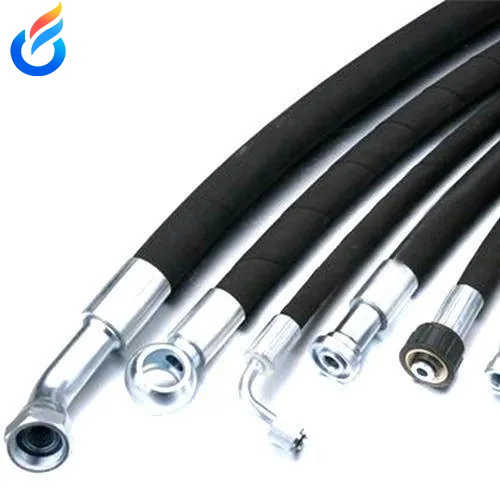
A hydraulic hose fitting is a connector that attaches a hose to another component in the hydraulic system, such as a pump, cylinder, valve, or another hose. Its primary functions are to:
-
Create a secure, sealed connection.
-
Direct hydraulic fluid without leaks.
-
Withstand the system’s operating pressure, temperature, and pulse cycles.
Fittings are typically made from durable materials like carbon steel, stainless steel, and brass to resist corrosion and handle high mechanical stress.
Common Types of Hydraulic Hose Fittings
Understanding the different types of fittings is crucial for compatibility and performance. They are generally categorized by their end connection style.
1. Permanent (Crimped) Fittings
This is the most common and reliable method for high-pressure applications. The fitting is permanently attached to the hose using a specialized crimping machine. This creates a robust, leak-free connection that is highly resistant to vibration and pressure surges.
2. Reusable (Field-Attachable) Fittings
As the name suggests, these fittings can be assembled and disassembled from the hose without a crimper, often using a simple wrench. They are ideal for field repairs, prototypes, and low-to-medium pressure applications. While cost-effective for one-off repairs, they are generally not as robust as permanent crimps for high-pressure use.
3. Flange Fittings
Flange fittings are used for very high-pressure applications and large hose diameters. They use a bolted connection with a flange and O-ring or gasket, providing an extremely strong and reliable seal. Common in industrial and marine hydraulics.
Popular Thread Standards and Sealing Methods
The thread type is what determines how the fitting seals with the port. Mixing thread standards is a common and costly mistake.
| Thread Standard | Full Name | Sealing Method | Key Features & Applications |
|---|---|---|---|
| JIC / 37° Flare | Joint Industry Council | Metal-to-metal on a 37° flare seat. | Common in North America. Excellent for high pressure but can be prone to over-torquing. |
| NPT / NPTF | National Pipe Tapered | Tapered threads create a seal by wedging together. | Widely used but requires thread sealant (e.g., Teflon tape). Can be difficult to seal perfectly. |
| ORFS | O-Ring Face Seal | A flat-faced fitting with an O-ring in a groove. | Provides a superior, leak-free seal. Excellent for high-pressure systems with vibration. |
| BSPP | British Standard Pipe Parallel | Parallel threads that seal via a crush washer or O-ring. | Common in Europe and Asia. Often confused with NPT; they are not interchangeable. |
| BSPT | British Standard Pipe Tapered | Tapered threads similar to NPT. | Common in Asia and Europe. Requires sealant. Not interchangeable with NPT. |
| SAE Straight Thread | Society of Automotive Engineers | Parallel threads that seal with an O-ring (e.g., SAE ORB). | Very reliable seal, common in fluid power applications. |
How to Choose the Right Hydraulic Hose Fitting
Selecting the correct fitting is a multi-step process. Always consult your equipment’s manual and a professional if you are unsure.
-
Identify the Thread Type: This is the most critical step. Determine the thread standard (e.g., JIC, NPT, ORFS) and the size (e.g., 1/2″, 3/4″) of the port you are connecting to. Use a thread pitch gauge for accuracy.
-
Match the Hose I.D. and Fitting Size: The fitting must be the correct size for the hose’s inner diameter (I.D.). Using a 1/2″ I.D. hose requires a 1/2″ fitting.
-
Determine the Configuration: Fittings come in various shapes like straight, 45°, 90° elbows, and tees. Choose a configuration that provides a clean hose routing without sharp bends or stress.
-
Consider the Application Environment:
-
Pressure Rating: The fitting must be rated for the system’s maximum operating pressure.
-
Temperature: Ensure the fitting material is compatible with the fluid and ambient temperature.
-
Fluid Compatibility: The fitting’s material and seals must be compatible with the hydraulic fluid used.
-
Environment: For corrosive environments (e.g., marine, chemical), stainless steel fittings are recommended.
-
The Importance of Proper Hose Assembly
Even the best hose and fitting can fail if not assembled correctly.
-
For permanent crimped fittings, always use a properly calibrated crimping machine with the correct die set for the hose and fitting size.
-
For reusable fittings, follow the manufacturer’s instructions precisely for assembly and disassembly.
-
When tightening, use a torque wrench if possible. Avoid over-tightening, which can strip threads and damage the sealing surface.
Frequently Asked Questions (FAQ)
Q: Can I mix different thread standards, like JIC and NPT?
A: No. They have different thread angles and sealing methods and are not interchangeable. Using an adapter is possible but not ideal for high-performance systems.
Q: What is the difference between NPT and NPTF?
A: NPT (National Pipe Tapered) requires a sealant to fill the gaps between threads. NPTF (National Pipe Tapered Fuel) has dry-seal threads designed to seal mechanically without sealant, though sealant is often still used for assurance.
Q: Why is my new hydraulic fitting leaking?
A: Common causes include using the wrong thread type, damaged or cross-threaded ports, incorrect installation (under or over-torquing), or a missing or damaged O-ring (on ORFS or SAE fittings).
Q: How do I know if I need a 90-degree or 45-degree elbow fitting?
A: This depends on your hose routing. The goal is to create a smooth, natural bend that avoids kinking the hose. Measure the space and choose the angle that minimizes stress on the hose ends.
Need the Right Hydraulic Hose Fitting? We Can Help!
Choosing the correct hydraulic hose fitting is not a place for guesswork. Our team of experts is here to ensure you get the perfect fitting for your application, ensuring safety, performance, and longevity.
[Contact Us Today] or [Browse Our Online Catalog] to find the hydraulic fittings you need.