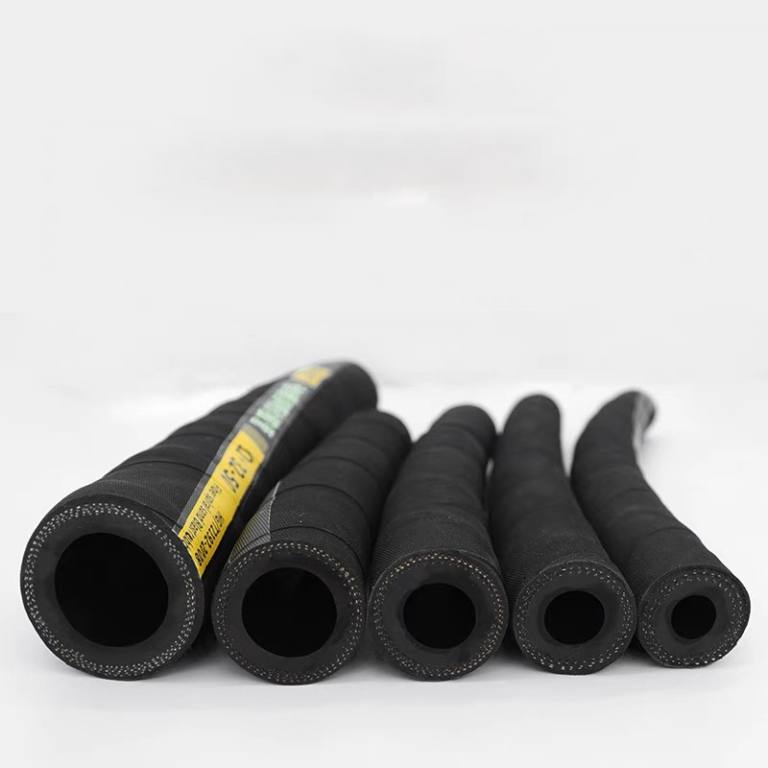
Hydraulic Hose Raw Materials
Hydraulic hoses are essential components in modern machinery, widely used in construction, agriculture, mining, and industrial equipment. Their performance, durability, and safety largely depend on the quality and combination of raw materials used in their construction. Understanding these materials helps buyers and engineers select the right hose for specific applications.
1. Inner Tube Materials
The inner tube is the core layer of a hydraulic hose, responsible for directly conveying hydraulic fluids. It must have excellent resistance to oil, chemicals, and temperature.
Common materials include:
- NBR (Nitrile Rubber): The most widely used material due to its excellent oil resistance and flexibility.
- Synthetic Rubber: Offers improved performance in extreme temperatures and harsh environments.
- Thermoplastics: Used in lightweight hoses with high chemical resistance.
Key properties:
- Oil and fluid compatibility
- Temperature resistance
- Flexibility and smooth flow performance
2. Reinforcement Layer Materials
The reinforcement layer provides strength and pressure resistance. It determines the hose’s working pressure and burst pressure.
Common materials include:
- High-tensile steel wire (braided or spiral):
- Steel wire braided: Suitable for medium-pressure hoses
- Steel wire spiral: Ideal for high-pressure and heavy-duty applications
- Textile fiber (polyester or aramid): Used in low-pressure hoses
Key properties:
- High tensile strength
- Fatigue resistance
- Ability to withstand pressure fluctuations
3. Outer Cover Materials
The outer cover protects the hose from environmental damage such as abrasion, weather, ozone, and chemicals.
Common materials include:
- CR (Chloroprene Rubber / Neoprene): Excellent weather and ozone resistance
- EPDM Rubber: Suitable for high-temperature and outdoor environments
- PU (Polyurethane): Provides superior abrasion resistance
Key properties:
- Abrasion resistance
- Weather and UV resistance
- Chemical and corrosion resistance
4. Additional Materials and Components
In some specialized hydraulic hoses, additional materials are used to enhance performance:
- Helical steel wire: Provides structural support for suction hoses
- Plastic or textile wraps: Improve flexibility and reduce weight
- Special coatings: Enhance fire resistance or anti-static properties
5. Material Selection Based on Application
Choosing the right raw materials depends on the working conditions:
- High-pressure systems: Steel wire spiral + NBR inner tube
- High-temperature environments: EPDM outer cover
- Chemical transfer: Thermoplastic inner tube
- Abrasive environments: PU outer cover
6. Importance of Quality Raw Materials
Using high-quality raw materials ensures:
- Longer service life
- Reduced maintenance costs
- Improved safety and reliability
- Better resistance to extreme working conditions
Low-quality materials may lead to hose failure, leakage, or even safety hazards in critical systems.
Conclusion
Hydraulic hose performance is directly linked to its raw materials. From the inner tube to the reinforcement layer and outer cover, each material plays a crucial role in ensuring durability, flexibility, and safety. For buyers and distributors, understanding these materials is key to selecting the right hose and building long-term trust with customers.