
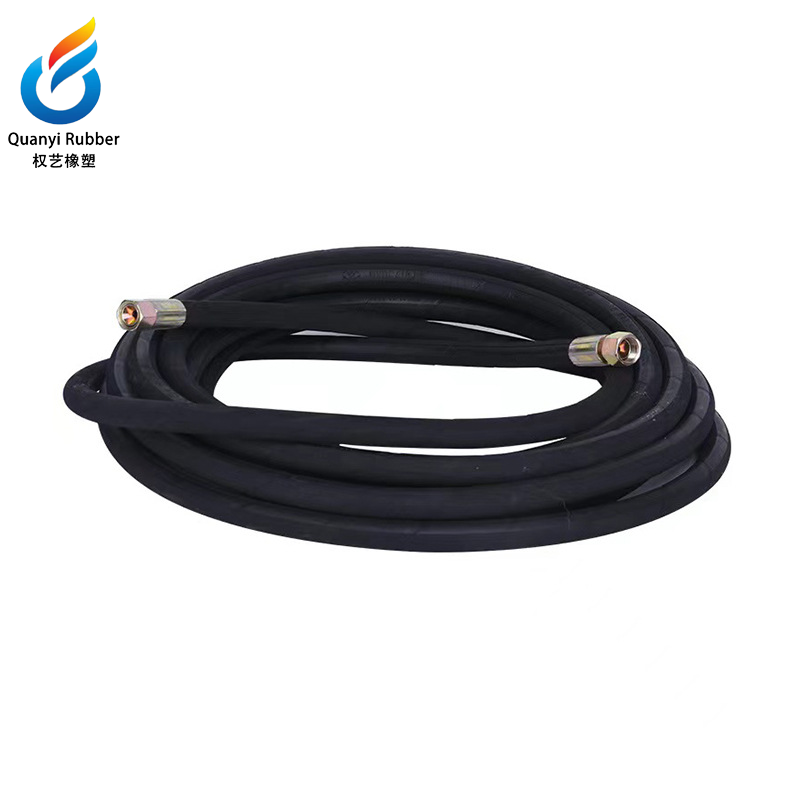
Applications of rubber hoses
When you hear the term “rubber hose,” your mind might jump to classic cartoons or perhaps a simple garden tool. But the humble rubber hose is far more than that. It’s a marvel of engineering, a critical component in countless industries, and an indispensable part of our everyday infrastructure. From delivering the water that brews your morning coffee to powering complex machinery, the rubber hose is a testament to how a simple invention can shape the modern world.
This article explores the fascinating world of rubber hoses, their evolution, types, and their vast applications.
A Brief History: From Simple Tubes to High-Tech Conduits
The story of the rubber hose begins with the discovery of vulcanization by Charles Goodyear in 1839. This process transformed natural rubber from a sticky, temperature-sensitive material into a durable, elastic, and weather-resistant substance. The first hoses were simple, reinforced tubes used for water and air. Over time, advancements in synthetic rubber (like Neoprene, Nitrile, and EPDM) and reinforcement materials (such as polyester, steel wire, and aramid fibers) have allowed hoses to handle everything from extreme pressures and temperatures to corrosive chemicals and abrasive materials.
Anatomy of a Rubber Hose: More Than Meets the Eye
A modern rubber hose is a sophisticated product typically composed of three layers:
-
Inner Tube: This is the core, made from a specific type of rubber compound chosen for its compatibility with the substance it carries (e.g., water, oil, fuel, chemicals).
-
Reinforcement Layer: This is the strength of the hose. It can be textile braiding, spiral-wound wire, or multiple piles of fabric that provide pressure resistance and prevent the hose from collapsing or bursting.
-
Cover: The outer layer is designed to protect the reinforcement from abrasion, weathering, ozone, and other external damage.
Key Types and Their Diverse Applications
The “one-size-fits-all” approach doesn’t apply to hoses. Their design is meticulously tailored to their function:
-
Industrial Hoses: These are the workhorses of manufacturing, construction, and mining.
-
Air & Water Hoses: Used for pneumatic tools, sprayers, and general water transfer. They are highly flexible and durable.
-
Steam Hoses: Built to withstand high temperatures and pressures for industrial cleaning and heating processes.
-
Chemical Hoses: Constructed with specialized liners (like PTFE or Viton) to safely transport aggressive acids, solvents, and other chemicals.
-
Material Handling Hoses: Used for suction and discharge of dry materials, granules, and abrasives like sand and cement.
-
-
Automotive Hoses: Your car couldn’t run without them.
-
Coolant Hoses: Channel antifreeze through the engine and radiator, resisting heat and ethylene glycol.
-
Fuel Lines: Designed to handle modern gasoline blends and prevent permeation of fumes.
-
Brake Hoses: Critical for safety, they must be incredibly strong and flexible to transmit hydraulic pressure to the brakes.
-
-
Specialty Hoses:
-
Food & Beverage Hoses: Made from FDA-approved, odorless, and tasteless materials to ensure the purity of products like milk, beer, and cooking oils.
-
Hydraulic Hoses: Used in heavy machinery like excavators and forklifts, designed to handle very high-pressure fluid power transmission.
-
Fire Hoses: The ultimate emergency hose, built for maximum durability and water delivery under extreme conditions.
-
Choosing the Right Rubber Hose: A Quick Guide
Selecting the correct hose is crucial for safety and efficiency. Always consider these factors:
-
Material Compatibility: What fluid or gas will flow through it? Using the wrong material can lead to hose degradation and failure.
-
Pressure Rating: Ensure the hose can handle both the working pressure and any potential surge pressures.
-
Temperature Range: Check both the temperature of the medium inside and the ambient environment.
-
Size and Flexibility: The inner diameter affects flow rate, while flexibility is key for routing in tight spaces.
-
Application Environment: Is it for indoor use, or will it be exposed to sunlight, ozone, abrasion, or chemicals?
Conclusion: An Enduring and Essential Innovation
The rubber hose is a perfect example of an invention that has quietly powered progress. It has evolved from a simple tube into a highly specialized, reliable, and vital component across every sector of the global economy. The next time you water your garden, fill your car with gas, or see a construction site, take a moment to appreciate the complex, durable, and flexible rubber hose working behind the scenes. It truly is an unsung hero of our technological civilization.
Keywords: Rubber Hose, Industrial Hose, Automotive Hose, Hydraulic Hose, Chemical Hose, Hose Supplier, Hose Manufacturing, Rubber Products, Engineering, Fluid Transfer.