How to Choose the Right Rubber Hose
Rubber hoses are essential components in countless applications, from industrial and automotive to gardening and household use. However, not all rubber hoses are created equal. Selecting the wrong one can lead to leaks, premature failure, safety hazards, and costly downtime.
This guide will walk you through the key factors to consider to ensure you choose the perfect rubber hose for your specific needs.
1. Identify the Application and Medium
The single most important question is: What will the hose carry?
The material inside the hose (the medium) directly determines the type of rubber compound required.
-
Water: Standard garden hoses are typically made from PVC or synthetic rubber like EPDM or SBR.
-
Air: Air compressor hoses need to handle high pressure and are often reinforced. They are usually made from nitrile or PVC.
-
Fuels & Oils: These substances degrade standard rubber. You need a hose made from Nitrile (Buna-N), which has excellent resistance to oils, fuels, and solvents.
-
Chemicals: The required material depends on the specific chemical. Common choices include EPDM (for acids, alkalis, and steam), Viton (for aggressive chemicals and high temperatures), and Neoprene.
-
Food & Beverages: Must use FDA-approved, non-toxic, and odorless materials like Silicone or specific grades of EPDM.
-
High-Temperature Materials: For steam or hot water, EPDM is a common choice. For very high temperatures, Silicone is excellent.
2. Understand Pressure Requirements
Hoses are rated for a specific working pressure. Exceeding this pressure can cause the hose to burst, creating a dangerous situation.
-
Working Pressure: The maximum continuous pressure the hose is designed to handle.
-
Burst Pressure: The pressure at which the hose will fail. This is typically much higher than the working pressure (e.g., 4:1 safety factor).
-
Vacuum Pressure: If your application involves suction (like a vacuum line), ensure the hose is rated for vacuum service to prevent it from collapsing.
Match the hose’s pressure rating to the maximum pressure of your system.
3. Consider Temperature Range
Rubber can become brittle in extreme cold and soften or degrade in extreme heat. Check both the ambient temperature (the temperature of the environment) and the medium temperature (the temperature of the material inside the hose).
-
EPDM: Excellent for high-temperature water and steam (up to 150°C / 300°F).
-
Silicone: Outstanding high-temperature resistance (up to 200°C / 400°F and higher).
-
Nitrile: Good for a standard range, but can become stiff in very cold conditions.
4. Check for Reinforcement
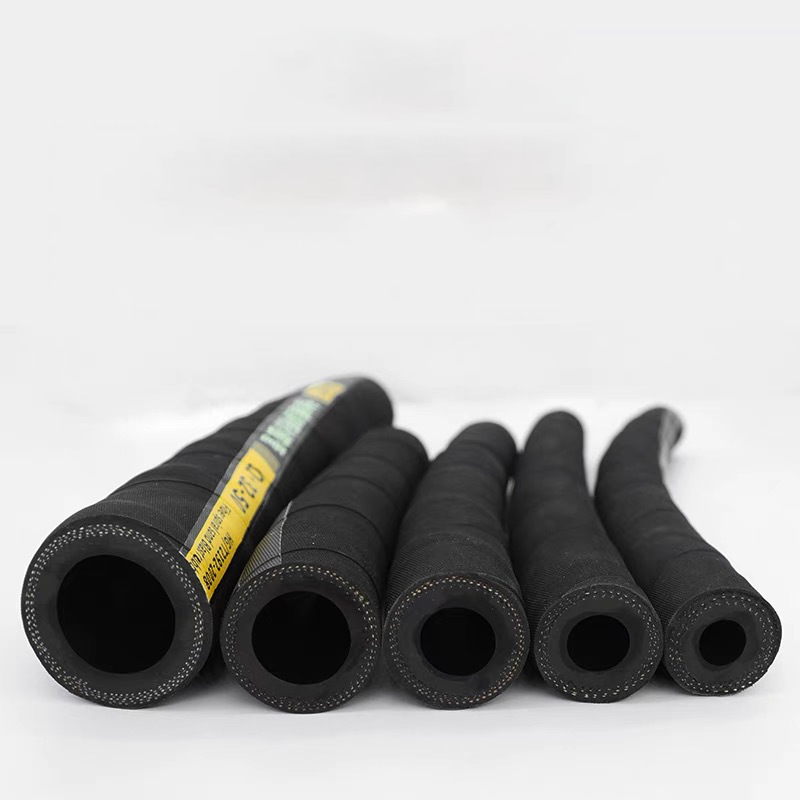
Many rubber hoses feature reinforcement layers to increase strength and durability, especially for high-pressure applications.
-
Textile Braid: A single or double layer of woven fabric for medium-pressure applications.
-
Wire Braid: One or more layers of spiral-wound steel wire for very high-pressure applications (e.g., hydraulic hoses).
-
Wire Helix: An embedded steel wire spiral that prevents the hose from collapsing under vacuum or suction.
5. Size and Flexibility Matter
-
Inner Diameter (ID): The inside width of the hose. Choosing the correct ID is crucial for maintaining adequate flow rate. A smaller ID can cause pressure drops and reduce efficiency.
-
Length: Ensure the hose is long enough for your needs without being excessively long, as friction in long hoses can reduce pressure.
-
Flexibility: If your application requires the hose to move or bend frequently, choose a hose designed for high flexibility. A stiff hose can be difficult to work with and may kink.
6. End Connections / Couplings
The hose is useless if it can’t be connected properly. Couplings can be made from brass, stainless steel, plastic, or other materials.
-
Material: Choose a coupling material that is compatible with your medium and environment (e.g., stainless steel for corrosive environments).
-
Thread Type: Ensure the thread type and size (e.g., NPT, BSP) match your equipment. A mismatched thread will not seal properly.
Quick Selection Chart
| Application | Recommended Material | Key Feature |
|---|---|---|
| Gardening | EPDM, PVC | UV Resistant, Flexible |
| Air Compressor | Nitrile, PVC | High-Pressure Reinforced |
| Fuel/Oil Transfer | Nitrile | Oil & Fuel Resistant |
| Steam/Hot Water | EPDM | High-Temperature Resistant |
| Food & Beverage | Silicone, FDA-EPDM | Non-Toxic, Odorless |
| Chemical Transfer | EPDM, Viton, Neoprene | Chemical Resistant (Check Charts!) |
Final Checklist Before You Buy:
-
Medium: What fluid/gas is it carrying?
-
Pressure: What is the max working pressure?
-
Temperature: What are the min/max temperatures?
-
Environment: Is it indoors, outdoors, exposed to UV or abrasion?
-
Size: What is the required Inner Diameter and Length?
-
Connections: What type of fittings are needed?
By carefully evaluating these factors, you can move beyond a simple guess and make an informed, safe, and cost-effective decision. Investing in the right rubber hose from the start ensures optimal performance, longevity, and safety for your equipment and operations.
Disclaimer: Always consult with the manufacturer’s specifications and a professional engineer for critical applications to ensure safety and compatibility.